Sees through smoke and debris
Our star network is designed to detect movement and breathing where cameras go blind, even when survivors cannot call for help.
The interactive room view is unavailable on this device.
PHASE is a search-and-rescue system that combines Wi-Fi sensing and audio analysis to help detect signs of life and reduce response time.
Swipe to explore the full diagram
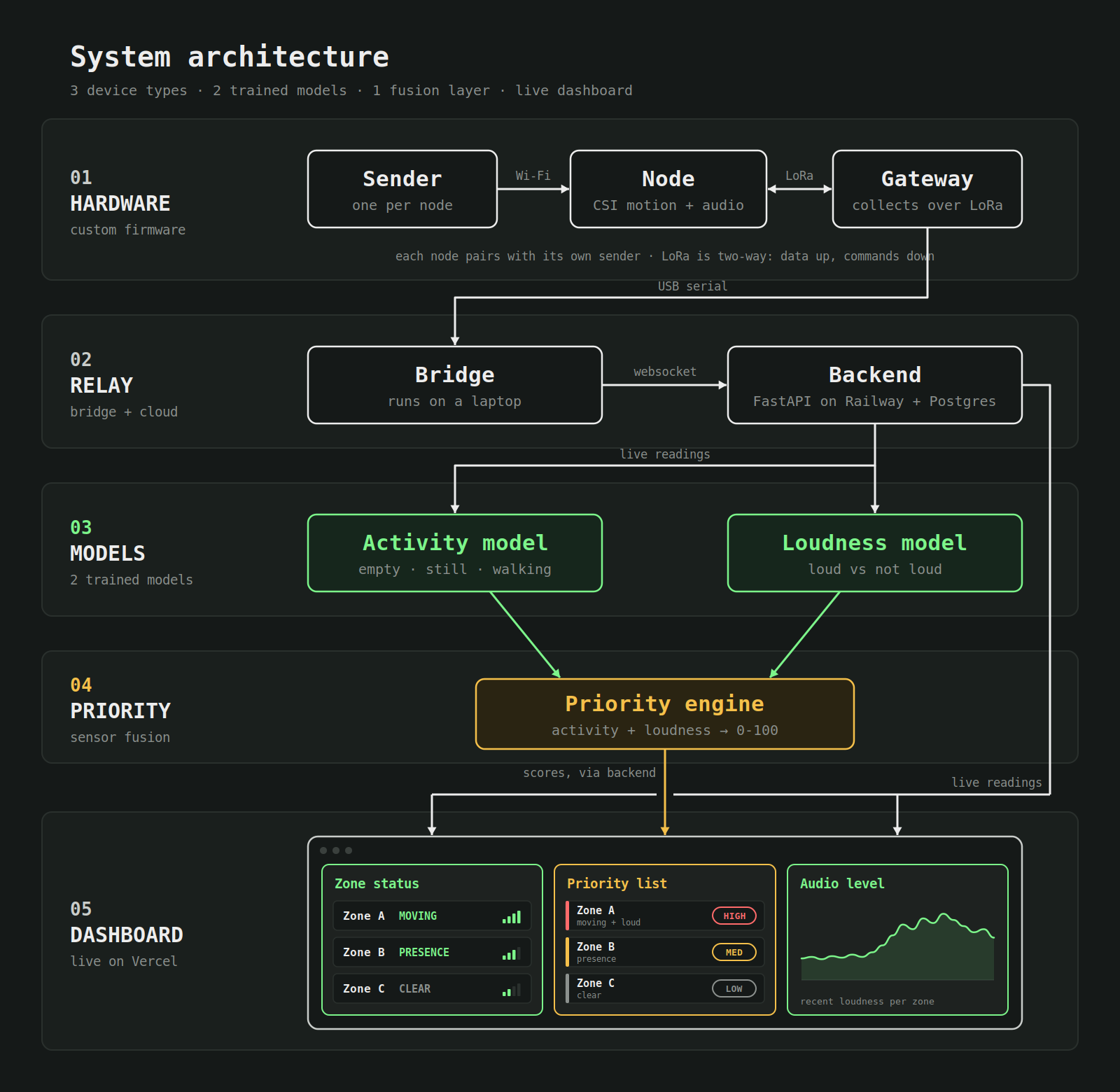
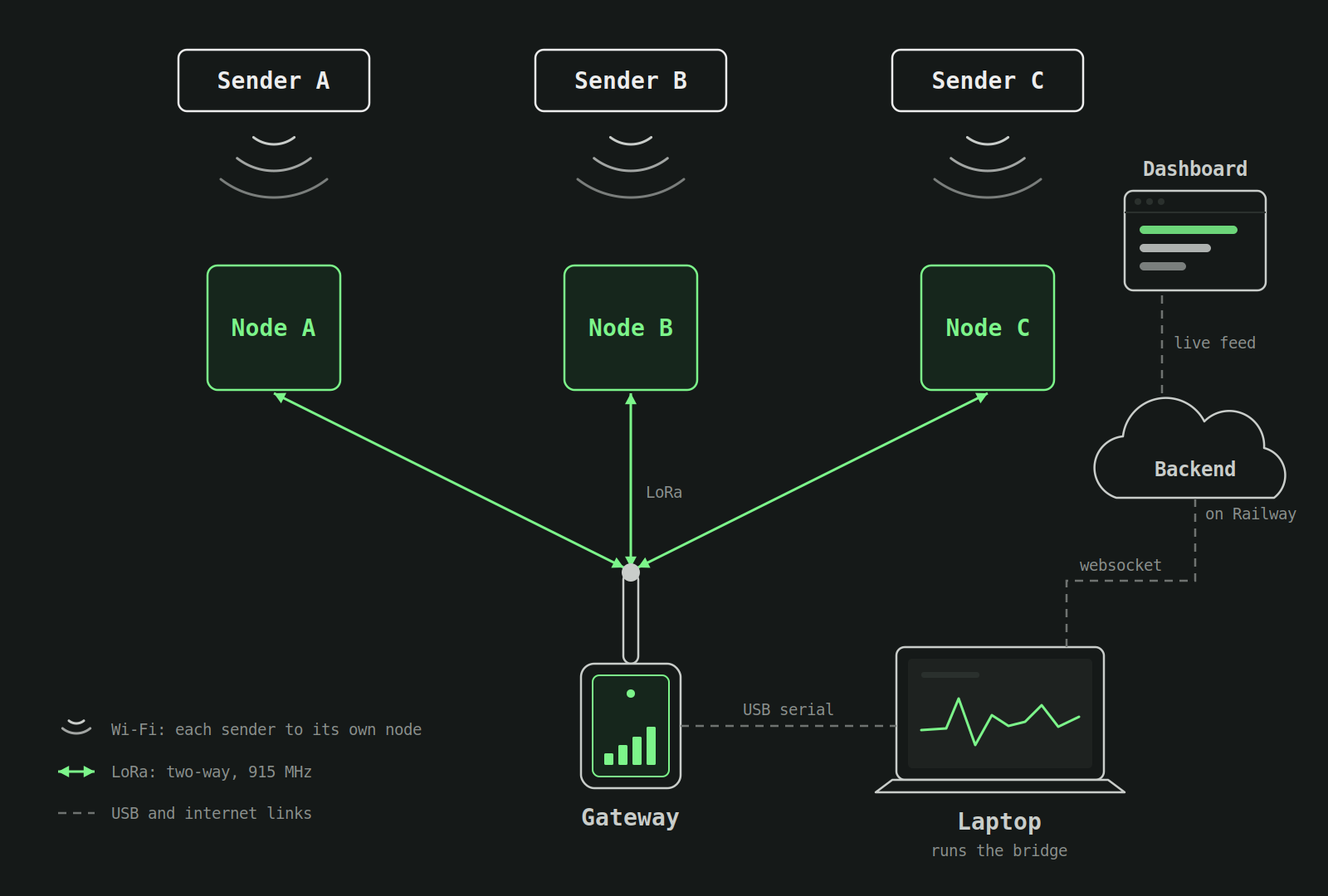
Position three sensing nodes around the area, each paired with its own sender. The nodes report their observations to a central gateway.
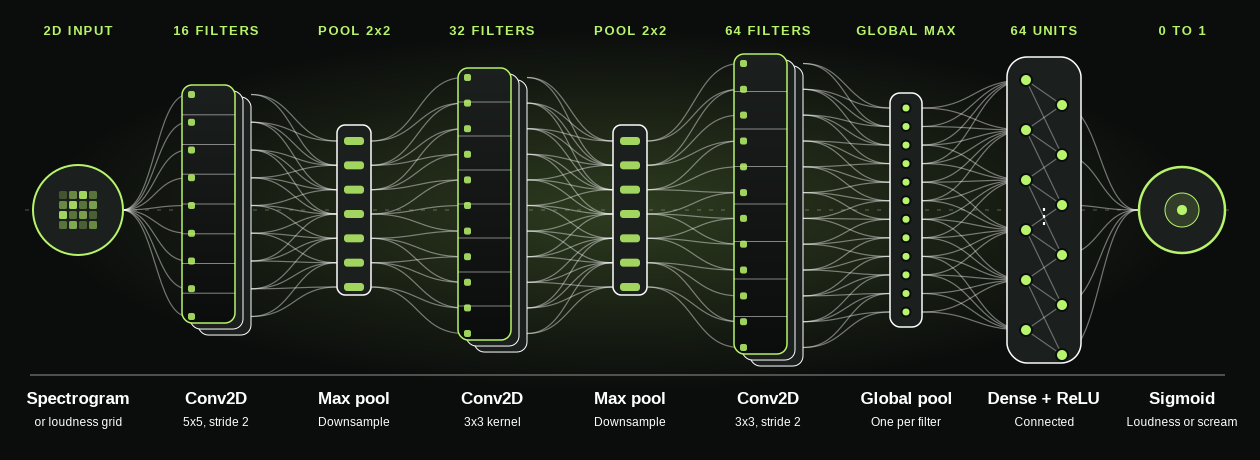
3 nodes, 3 paired senders, 1 gatewayEach node observes changes in its paired sender's Wi-Fi signal through channel state information (CSI). Node microphones provide audio samples for a model designed to flag possible human screams.
Wi-Fi CSI + audio classificationThe gateway brings the observations together for a display of possible areas of activity that responders can assess and verify on site.
Estimated activity, human verification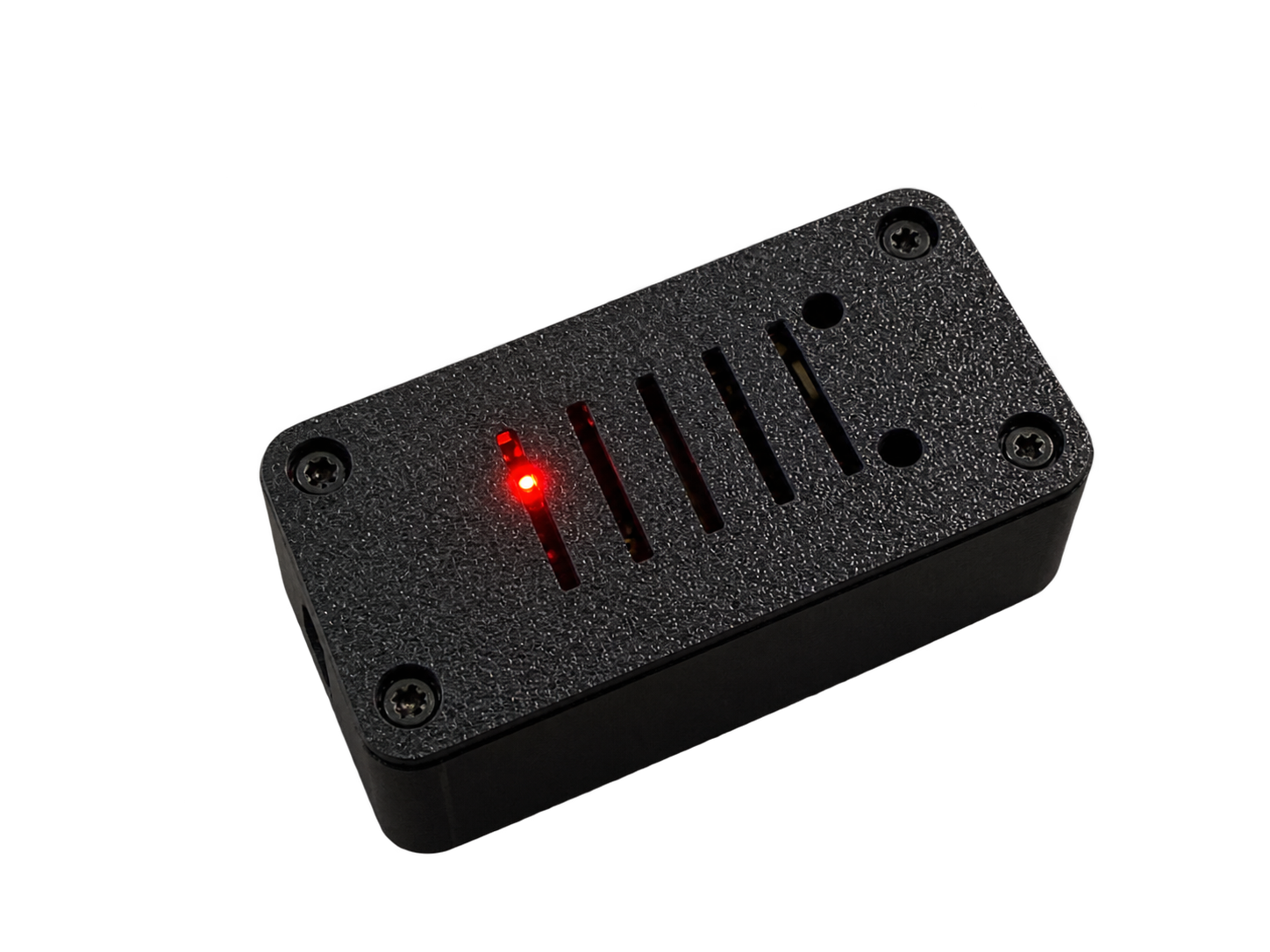
Pairs with one node and transmits Wi-Fi frames continuously, giving the node a steady signal to measure.
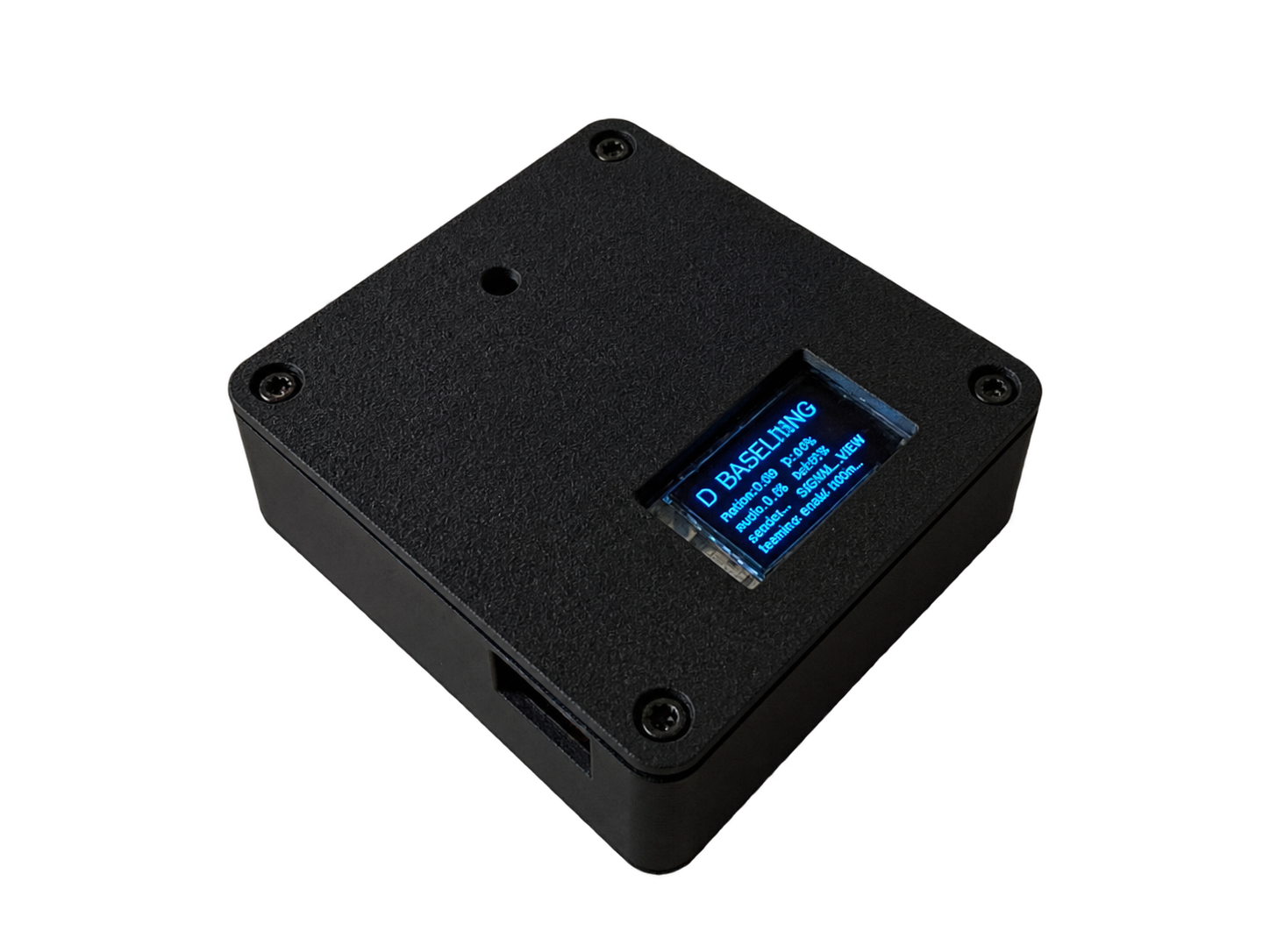
Detects motion from changes in its sender's Wi-Fi signal, measures how loud the area is, and reports both to the gateway over LoRa.
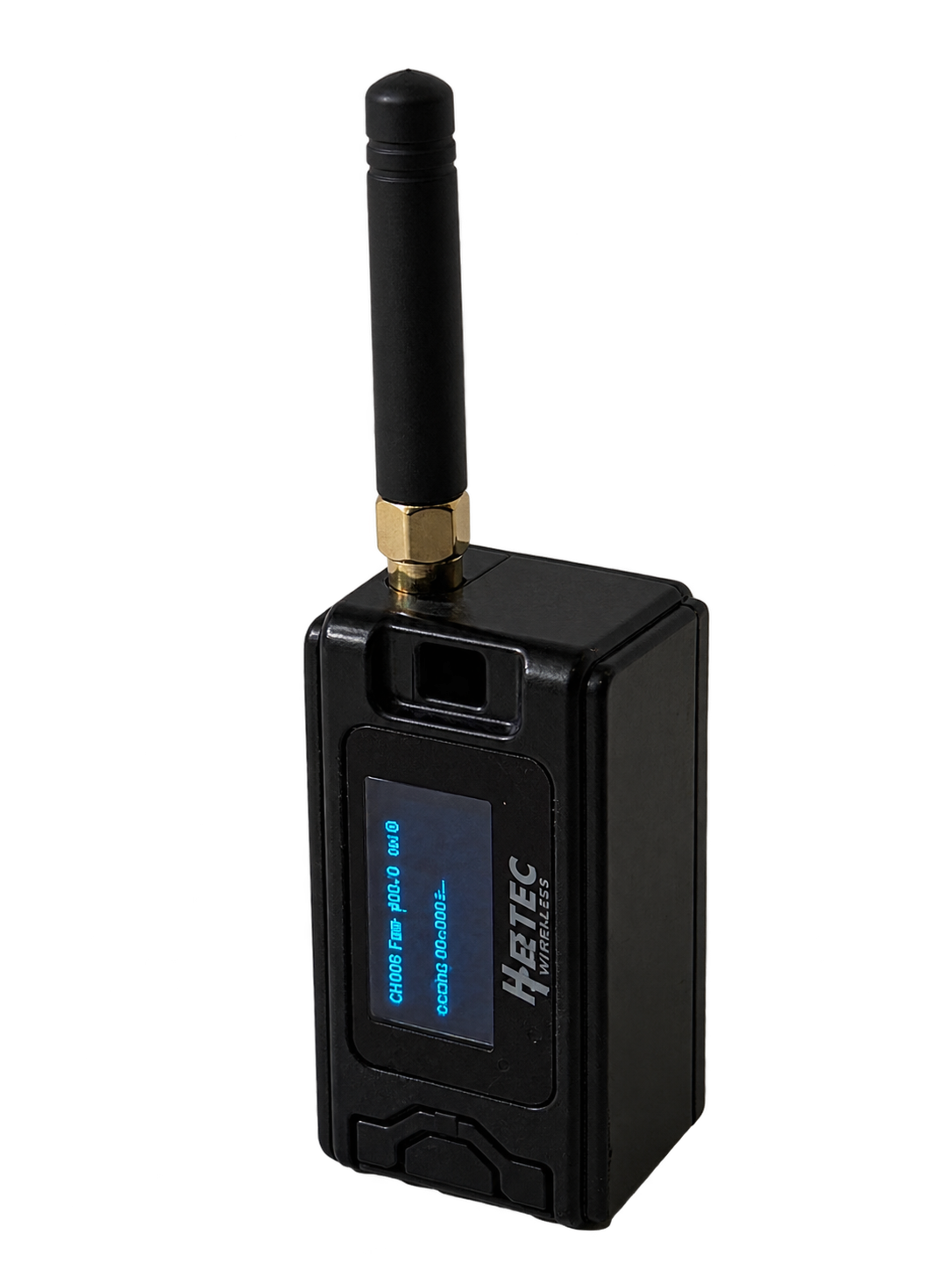
Receives readings from every node over two-way LoRa, confirms each one, sends commands back when needed, and passes the data to the laptop over USB.
Our star network is designed to detect movement and breathing where cameras go blind, even when survivors cannot call for help.
Instead of one radar checking one spot at a time, the receiving nodes monitor their zones simultaneously and report to a central gateway.
Built from low-cost nodes, the system is designed for rapid placement and calibration, giving responders a live view of where to search first.
Fixed nodes could provide known coverage and repeatable placement in buildings equipped ahead of an incident.
Responders might position temporary nodes, potentially with drones, when a building has no installed system.